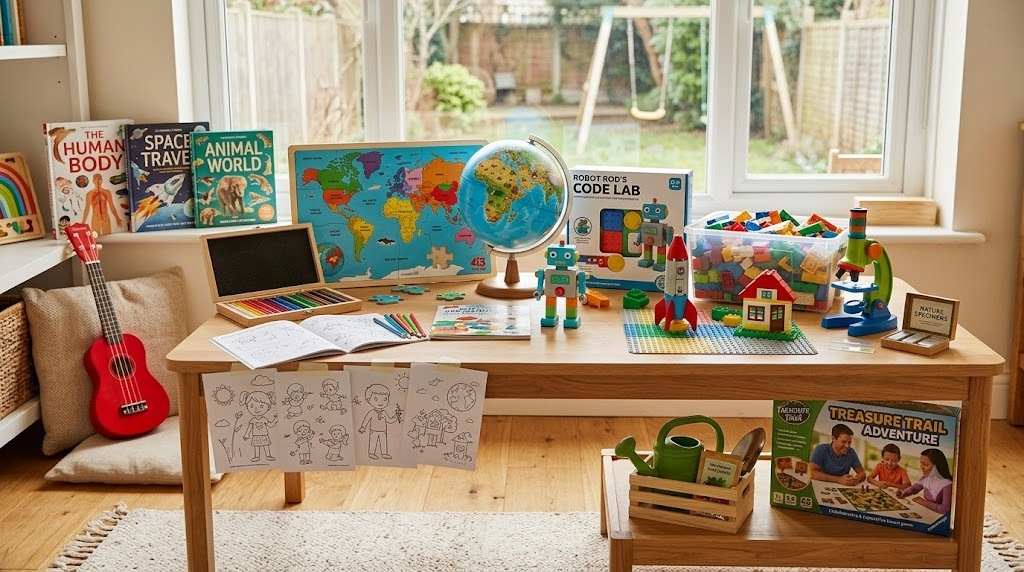
In this article, you'll find 10 screen-free activities suited to children aged 2, 3, and 4, which you can set up at home in just a few minutes. From sensory games to crafts, including an original idea for turning your family photos into personalized coloring pages.
Why are screen-free activities essential at this age?
Between the ages of 2 and 4, a child's brain develops at a spectacular pace. This is the age when fine motor skills, language, concentration, and creativity are built. Hands-on activities and construction games play a direct role in this development.
Screens, on the other hand, engage a passive mode of reception. The child watches but doesn't create. They consume but don't experiment. Pediatricians recommend encouraging "open-ended" play: games where the child decides for themselves what to do with the materials they're given.
Good news: most of the activities you're about to discover here require materials you probably already have at home.
1. The sensory bin
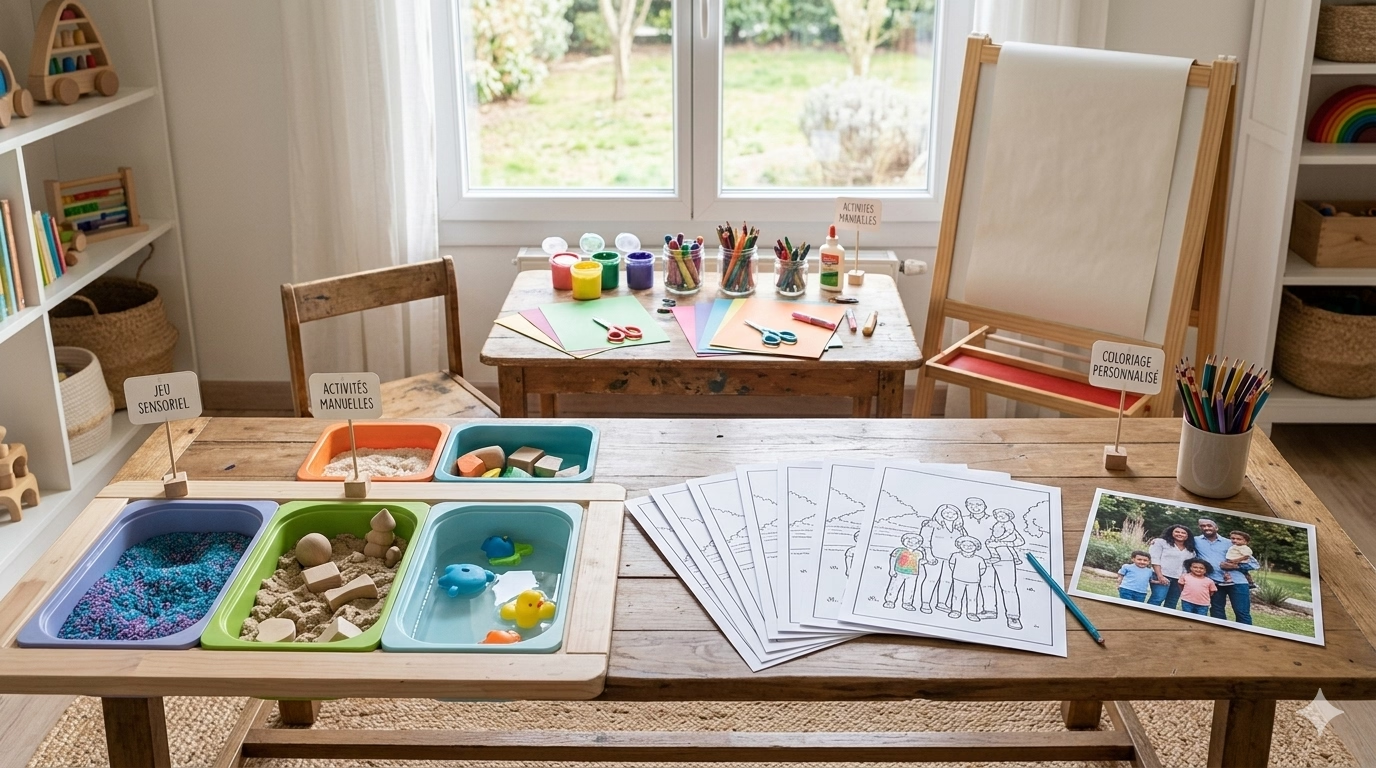
Suitable from 18 months.Fill a large plastic bin with rice, pasta, sand, or dried beans. Add small objects to bury (spoons, toys, strainers) and let your child explore freely.The sensory bin develops touch, fine motor skills, and concentration. A 3-year-old can be absorbed in it for 30 to 45 minutes without any intervention from you.Tip: place a tarp under the bin to make cleanup easier.
2. Finger painting
Suitable from 2 years old.Finger painting is one of the first creative activities accessible to toddlers. Use non-toxic, washable paints, protect the table with newspaper, and let your child experiment freely.Don't try to achieve a "clean" result. The goal is the pleasure of creating, not the masterpiece. A 2-year-old who scribbles enthusiastically is learning to control their movements.
3. Personalized coloring
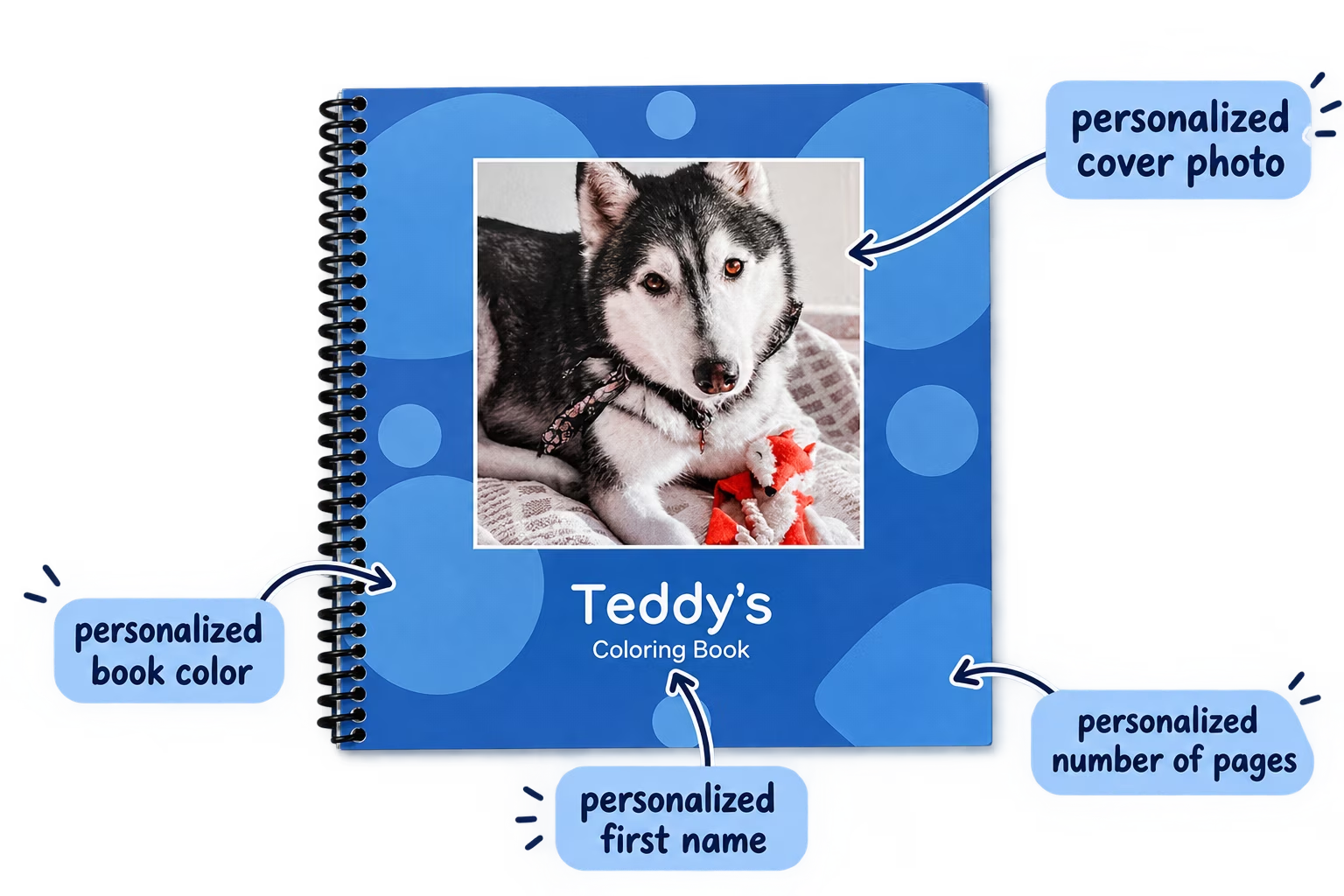
Suitable from 2 years old.Imagine giving your child a page to color featuring their own photo: themselves, their pet, their grandparents, or their favorite character turned into a drawing to color.That's what Coloriboo offers: an online service that converts your personal photos into printable coloring pages or coloring books delivered to your home.
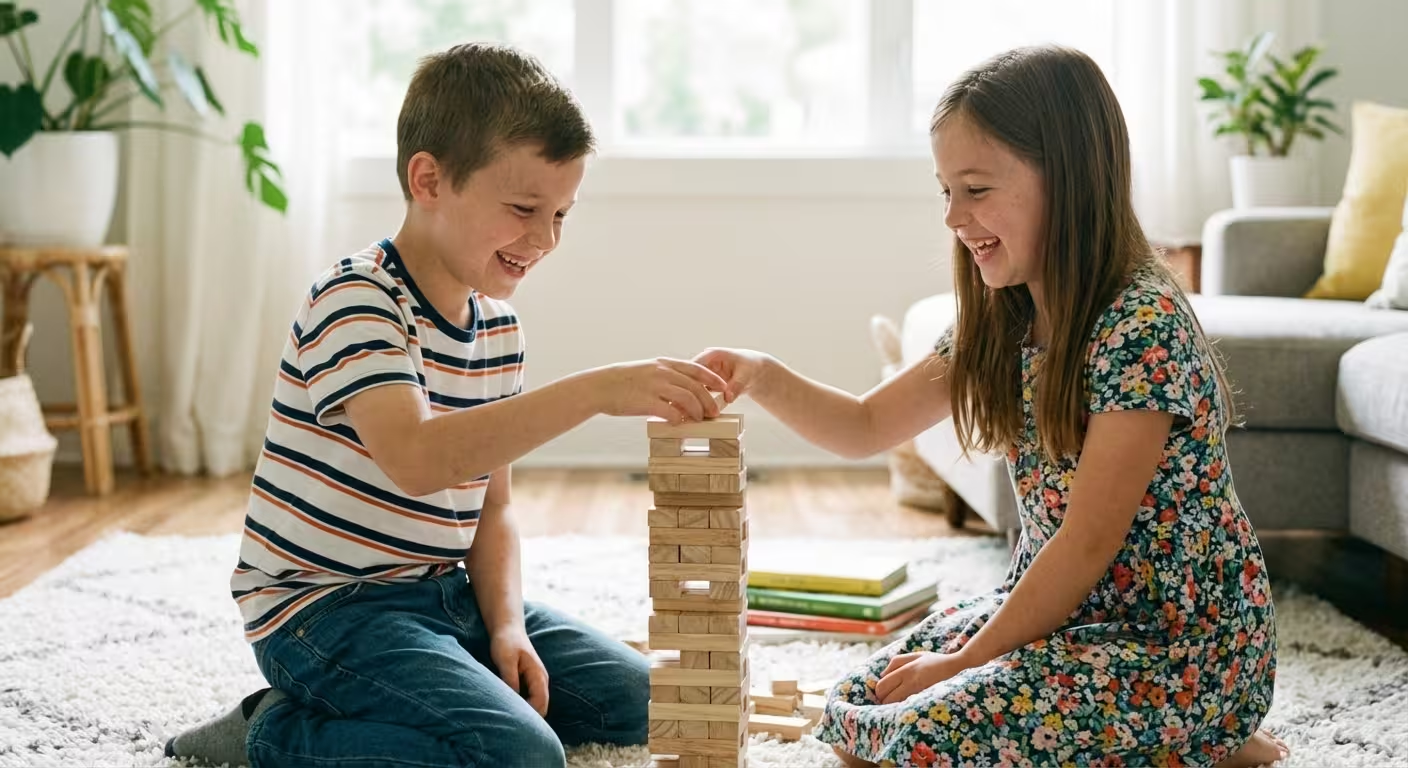
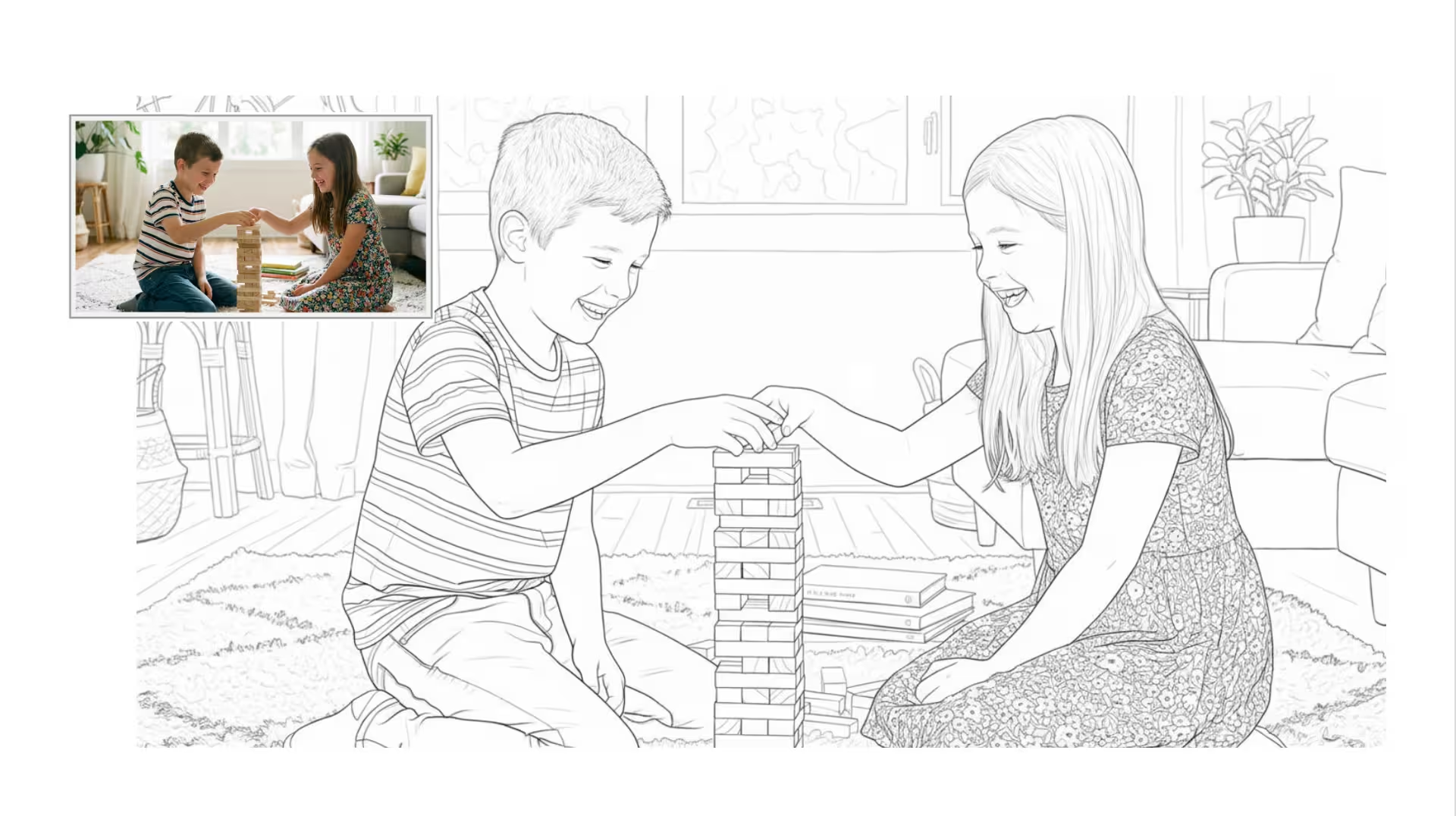
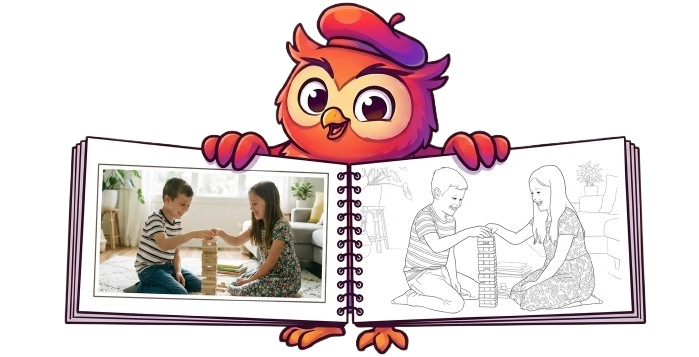
The benefit is twofold: your child colors a subject that is familiar and emotionally close to them (their family, their dog, their cat), which boosts their motivation. And you get a calm, creative, screen-free activity in just a few minutes.Coloring pages start at just €0.24 each. Personalized coloring books, starting at €14.90, also make highly appreciated birthday gifts.
4. The mystery box game
Suitable from 3 years old.Take a shoebox and cut a hole just big enough for a child's hand to fit through. Slip everyday objects inside (a spoon, a toy, a piece of fruit) and ask your child to guess what they're touching without looking.This game develops vocabulary, tactile memory, and concentration. It also encourages verbal expression: "It's cold, it's round, it's... a ball!"
5. The animal guessing game
Suitable from 2 years old.Mime an animal (walk like a penguin, roar like a lion, hop like a kangaroo) and ask your child to guess which one. Then, switch roles.This game develops vocabulary, memory, and body expression. At 3-4 years old, you can introduce verbal clues: "It's an animal that lives in the ocean, it's gray and very intelligent..."
6. Magazine collage
Suitable from 3 years old.Provide your child with old magazines, a pair of round-tipped scissors, glue, and a sheet of cardstock. The instruction: create a collage on a theme (animals, my family, things I like to eat).Cutting and gluing develop fine motor skills, creativity, and the ability to organize elements in space. The result can then be displayed in their bedroom.
7. The treasure hunt at home
Suitable from 3 years old.Hide a "treasure" (this could be a small toy or a few candies, for example) somewhere in the house and guide your child with verbal clues or drawings. At 3 years old, the clues are simple and verbal ("hot / cold"). At 4 years old, you can introduce little written words or map drawings.This game develops logic, understanding of instructions, and enthusiasm. The anticipation of the treasure is often just as exciting as the discovery itself.
8. Interactive reading
Suitable from 18 months.Reading a story is a classic activity, but making it interactive changes everything. Ask questions during the reading ("What do you think he's going to do now?"), ask your child to point out elements in the illustrations, and let them "tell" the pages they know by heart in their own way.At 3-4 years old, your child can also invent the continuation of a story or change the ending. These variations develop narrative creativity and lay the foundations for learning to read.
9. The color sorting game
Suitable from 18 months.Place objects of different colors on the floor (toys, bottle caps, pom-poms, Lego) and set out boxes or circles of colored paper. The instruction: put each object in the right box.This very simple game develops logic, concentration, and fine motor skills. For 3-4-year-olds, you can increase the difficulty by adding shades (light blue, dark blue) or by sorting by shape.
10. Building with cardboard boxes
Suitable from 2 years old.Save your cereal boxes, toilet paper rolls, and packaging cartons. With tape and crayons, your child can build castles, robots, cars, or houses.This game develops creativity, spatial thinking, and perseverance. A 4-year-old can spend an entire hour building their "rocket."
Personalized coloring: a chameleon activity for all ages
Among all the activities featured in this article, personalized coloring deserves special attention because it naturally adapts to all ages.
- At 2 years old: your child freely scribbles on a page with very simplified lines (a face, an animal). The key is that they recognize the subject: "That's me! That's Rover!"
- At 3 years old: they start to stay within the lines and deliberately choose their colors.
- At 4 years old: they aim to "do it well" and can spend 20 to 30 minutes on a single page.
With Coloriboo, you can choose the level of complexity of the drawing according to your child's age. A family photo turned into a coloring page with thick, well-defined lines for a 2-year-old, or a more detailed composition for a 4-year-old who is already comfortable with crayons.
And if you're looking for a small gift idea to give to guests at a child's birthday party, a personalized coloring book is an original, memorable, and affordable touch.